

Choosing materials and finishes for pneumatic cylinder connections
A stainless fork is not automatically a stainless joint. The pin, rotating shaft, retaining ring and surface finish need their own lines on the specification.

Choose the material by component and the finish by exposure and fit requirement. Dongzhou lists Q235A with rust-proof oil, zinc or nickel plating for an FK clevis, and 303, 304 or 316 stainless alternatives with surface passivation. Its FKR rotating clevis is different: the published fork, shaft and retaining ring have separate steel specifications. Confirm the complete assembly before ordering a material substitution.
The material map depends on the connection
The phrase "stainless cylinder clevis" sounds specific until a buyer has to approve the mating pin. Dongzhou's clevis, clip and pin range contains complete joints and separate components. The published material notes are not identical across families. Here is the comparison that matters before a drawing is released:
| Published family | Base material stated by Dongzhou | Finish or alternative stated | What to clarify on the order |
|---|---|---|---|
| FK metric clevis | Q235A low-carbon steel | Rust-proof oil, zinc plating or nickel plating. Alternatives: stainless 303, 304 or 316 with passivation; aluminum 6061 with cleaning or anodizing; steel 45 with oil, zinc or nickel. | Which selected fork material and finish, plus whether the supply includes a pin or circlip. |
| PC clevis bolt/pin | Q235A low-carbon steel | The PC page lists the same material families and corresponding treatment choices as its own options. | Specify the pin independently; a stainless FK does not silently change the PC pin material. |
| FKR rotating clevis | Fork: Q235A. Shaft: steel 45. Ring: spring steel. | Oil, zinc plating or nickel plating is listed for each of these component groups. | The public page does not list a stainless FKR assembly; ask for a reviewed component-by-component proposal. |
| FI self-aligned coupling | Ball stud and spherical washer: 20CrMo. Housing, threaded bushing and hex nut: Q235A. | Heat treatment and zinc plating are stated for the 20CrMo pieces; zinc plating for the Q235A pieces. A 304 stainless, passivated alternative is listed. | Confirm which pieces change in the stainless alternative and review the resulting assembly properties on its current drawing. |
This is a map of published options, not a stock list or an equivalence certificate. A catalogue page can name a material alternative without proving the same allowable force, moving-interface behavior or delivery configuration for every variant. Those are separate approval questions.
Start with the FK fork, then specify the PC pin
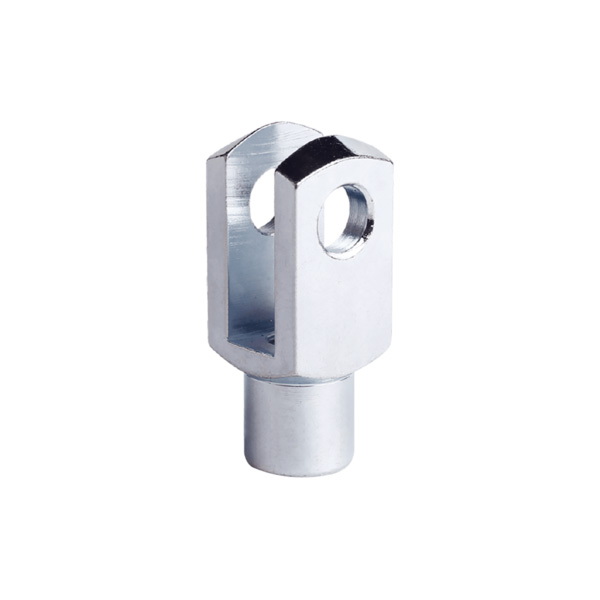
The FK page explicitly says that clevis assemblies may be supplied with pins, bolts or circlips as required. That is useful flexibility, but it also means "FK, stainless" is an incomplete purchase description. The mating hardware must be called out.
Two product pages, two material decisions
The PC clevis bolt page lists its own Q235A, stainless 303/304/316, aluminum 6061 and steel 45 options. Do not carry the fork's grade over to the pin without writing it down. If a retainer is included, request its material and finish as well; these two pages do not define every possible clip as stainless.
Geometry still matters after the material choice. Check fork bore and width, pin diameter and usable length, locking method, and the mating eye. For a plated pin, the finished fit rather than only the bare-metal dimension needs to satisfy the drawing.
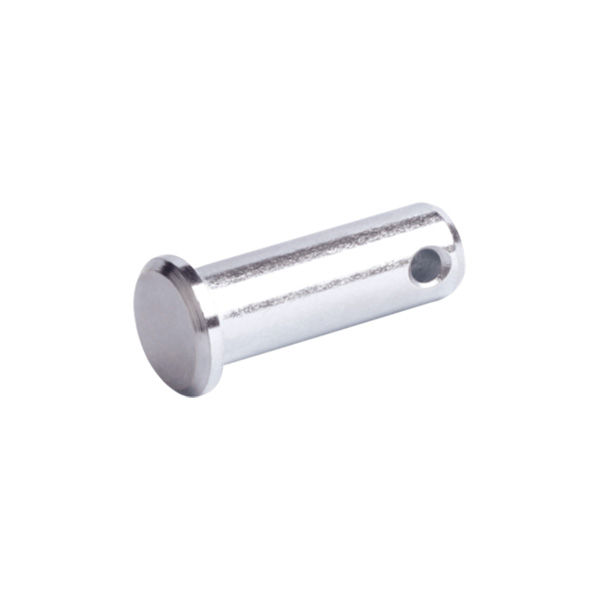
From the factory side, the safest point to settle these choices is before the drawing and purchase description diverge. A physical sample can show that a pin slides through a fork. It cannot, by itself, preserve whether the next batch should be 304 passivated, Q235A zinc plated or a mixed-material assembly.
The FKR example: the fork is only one of three parts
The FKR page identifies the fork as Q235A, the shaft as medium-carbon steel 45 and the ring as spring steel. It also tells installers to lubricate moving parts and contact surfaces. Its public material list does not promise a stainless FKR option. Copying the stainless grades from the FK page into an FKR specification would be an assumption, not a catalogue fact.
A better change request
If the environment drives a stainless request, mark the fork, shaft and retaining ring on the assembly drawing. Ask Dongzhou which materials and surface treatments it can offer for each part, how the moving interface will be handled, and which approved force and movement data apply to that proposed assembly.
A color or plating change alone does not answer the rotating-interface question. The specified lubrication, the finished shaft fit and access to the ring after installation still need review.
FI couplings make the same point at another interface
The FI self-aligned articulated coupling is listed for pneumatic cylinders. Its public bill of materials is not one uniform steel: Dongzhou names 20CrMo for the ball stud and spherical washer, with heat treatment and zinc plating, while the housing, threaded bushing and nut are Q235A with zinc plating. The page also lists 304 stainless with passivation as an alternative.
The word "alternative" does not tell us from that page which FI parts are replaced, whether a stainless ball-stud surface has the same treatment as the listed 20CrMo one, or whether the assembled coupling keeps identical performance data. The useful engineering question is therefore narrower: Which FI component drawing and material schedule apply to the chosen variant?

Zinc plating and stainless passivation are different instructions
When specifying plated steel
Dongzhou's FK and PC pages offer rust-proof oil, zinc plating or nickel plating for their listed carbon-steel options. Those are choices, not synonyms. If the application requires zinc electroplating to a particular standard, thickness class or supplementary finish, include that requirement in the inquiry and ask for confirmation.
ASTM B633-23 covers electrodeposited zinc coatings on iron and steel and describes thickness classes, supplementary finishes and testing considerations. Citing the standard here explains the specification questions; it does not claim Dongzhou's unspecified plated parts conform to it.
When specifying stainless
Dongzhou lists surface passivation for its stated FK, PC and FI stainless alternatives. Passivation is not a substitute word for zinc plating. Ask which grade and passivation process apply to the actual part and what evidence, if any, your project requires for acceptance.
ASTM A967/A967M-25 covers chemical passivation treatments and alternative confirmation tests. Its scope explicitly does not select a stainless grade or treatment for a particular application. A purchasing drawing must do that work.
What a catalogue finish does not establish: a corrosion lifetime, a salt-spray duration, a coating thickness, a surface-process certificate or the suitability of a selected grade for a specific washdown chemical. Describe the actual exposure and request the relevant acceptance criteria. Do not treat a material name as a test result.
Put the complete assembly on the inquiry
Dongzhou's company page says non-standard parts can be developed from supplied drawings or samples. For this kind of request, a marked-up assembly drawing does more work than an email saying "same part, stainless." It makes the interfaces visible and tells the factory which components the change actually covers.
Drawing notes worth sending
- Identify FK, PC, FKR or FI part numbers, drawing revision and whether the purchase line is a loose component or a complete assembled joint.
- Label the base material separately for fork, pin or shaft, retaining ring or clip, eye, housing and threaded pieces that are included.
- State oil, zinc, nickel, passivation or another requested treatment per component, along with any specific coating class, inspection or certificate requirement for review.
- Show finished mating dimensions, thread designation, articulation or rotation, loading direction, lubrication plan and access for assembly.
- Describe the service exposure and quantity. Ask Dongzhou to confirm the resulting bill of materials and variant-specific drawing before approval.
That last confirmation matters most when materials are changed. A stainless alternative printed on one product page is not a universal stainless option for neighboring families. Nor is a published material list a substitute for verifying the selected assembly's fit and allowable loading.
Review the material schedule with Dongzhou
Send Ningbo Dongzhou Transmission Co., Ltd. the assembly drawing or sample, the selected FK, PC, FKR or FI family, and a line-by-line material and finish request. We can use that information to review the applicable catalogue options or a non-standard connection without guessing what "stainless assembly" means.
Questions buyers ask
Can I order an entire FKR rotating clevis in stainless steel?
Dongzhou's published FKR material list identifies a Q235A fork, steel 45 shaft and spring-steel ring, with oil, zinc or nickel finish options. It does not specify a stainless FKR assembly. Ask Dongzhou to review each component and the current drawing if stainless is required.
Does surface passivation mean stainless steel is zinc plated?
No. Dongzhou lists passivation for its stainless alternatives and zinc plating for its stated carbon-steel options. They are different surface treatments. Specify the selected base material and the required finish separately for each component.
What should a buyer include when requesting a plated or stainless clevis assembly?
Send the selected part numbers or drawing, fork and pin or shaft details, retaining hardware, exact material for each part, intended finish, mating dimensions, exposure conditions, movement and loading requirements, quantity, and any required coating or passivation verification. Ask Dongzhou to confirm the complete bill of materials before approval.
Product and standards basis
Component materials and offered finishes: Dongzhou's linked FK, PC, FKR and FI pages. Standard scopes: ASTM B633-23 and ASTM A967/A967M-25. These references do not establish certification of any selected Dongzhou variant.