

Radial Spherical Plain Bearings: The Self-Aligning Bearing Solution for Heavy-Duty Applications
In many mechanical systems, shafts and connecting components do not always operate under perfect alignment. Small installation errors, structural deformation, or changing loads can create additional stress on ordinary bearings.
This is where Radial Spherical Plain Bearings become valuable. Unlike conventional rolling bearings that rely on balls or rollers, spherical plain bearings use a sliding contact structure that allows angular movement while supporting radial loads.
From construction machinery and automotive systems to industrial equipment and automation devices, these bearings help improve mechanical flexibility, reduce stress concentration, and maintain stable operation under challenging conditions.
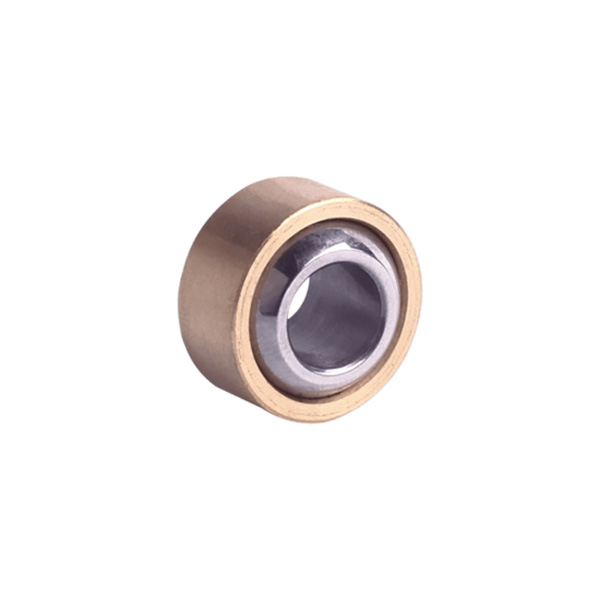
What Are Radial Spherical Plain Bearings?
A Radial Spherical Plain Bearing is a type of plain bearing designed mainly to support radial loads while allowing rotational movement and angular misalignment between connected components.
The basic structure usually consists of:
An outer ring with a spherical inner surface
An inner ring with a spherical outer surface
A sliding contact surface between the two rings
The spherical design allows the inner ring to tilt inside the outer ring, making the bearing suitable for applications where alignment changes may occur.
How Do Spherical Plain Bearings Work?
Unlike ball bearings, spherical plain bearings do not use rolling elements.
Their operation depends on the sliding movement between two curved surfaces.
When the shaft moves:
The inner ring rotates or tilts inside the outer ring.
The spherical contact surface distributes the load.
The bearing compensates for angular misalignment.
This design provides smooth movement even when the connected components are not perfectly aligned.
Why Are Radial Spherical Plain Bearings Different from Traditional Bearings?
Traditional rolling bearings are excellent for high-speed rotation, but they have limitations when dealing with:
Misalignment
Oscillating movement
Heavy impact loads
Limited installation space
Spherical plain bearings are designed for situations where flexibility and load capacity are more important than extremely high rotational speed.
Why Don’t Spherical Plain Bearings Always Need Rolling Elements?
Many people associate bearings with steel balls or rollers. However, sliding bearings have existed for much longer than modern rolling bearings.
The reason spherical plain bearings remain widely used today is simple:
In some applications, controlled sliding is more reliable than rolling.
For example:
Hydraulic cylinders
Suspension systems
Construction equipment joints
These systems often experience repeated swinging movement rather than continuous rotation. Rolling elements may not always be the best solution because the movement angle is limited and loads can be very high.
Main Types of Radial Spherical Plain Bearings
1. Steel-on-Steel Spherical Plain Bearings
This traditional design uses steel contact surfaces.
Advantages:
High load capacity
Suitable for heavy-duty applications
Can withstand shock loads
Typical applications:
Construction machinery
Agricultural equipment
Industrial mechanisms
However, regular lubrication is usually required.
2. Maintenance-Free Spherical Plain Bearings
These bearings use special sliding materials such as:
PTFE composite layers
Fiber-reinforced materials
Self-lubricating liners
Advantages:
Reduced maintenance
No frequent lubrication required
Suitable for cleaner operating environments
3. Rod End Type Spherical Bearings
These combine a spherical plain bearing with a threaded housing.
Common applications:
Control systems
Steering mechanisms
Adjustable linkages
Key Performance Characteristics
High Load Capacity
Because the contact area is larger than many rolling bearing designs, spherical plain bearings can handle heavy radial forces.
They are often used where equipment experiences:
Heavy pressure
Shock loading
Repeated movement
Self-Alignment Capability
One of the biggest advantages is the ability to compensate for angular misalignment.
This helps reduce:
Uneven loading
Edge stress
Premature wear
Suitable for Oscillating Motion
Many machines do not require continuous rotation.
Examples include:
Hydraulic cylinders moving back and forth
Robotic joints
Suspension components
Spherical plain bearings perform well in these situations.
Common Applications of Radial Spherical Plain Bearings
Construction Machinery
Used in:
Excavators
Cranes
Loaders
Earthmoving equipment
These machines generate large forces and frequent joint movement.
Automotive Systems
Applications include:
Suspension systems
Steering components
Link mechanisms
Industrial Equipment
Commonly found in:
Hydraulic systems
Press machines
Automation equipment
Heavy mechanical assemblies
Aerospace and Defense Equipment
High-performance versions are used where reliability and weight control are important.
Material Selection for Spherical Plain Bearings
Different applications require different materials.
|
Component |
Common Materials |
|
Inner Ring |
Bearing steel, stainless steel |
|
Outer Ring |
Hardened steel, alloy steel |
|
Sliding Layer |
PTFE composite, bronze, special alloys |
|
Surface Treatment |
Chrome plating, phosphating, corrosion-resistant coatings |
Material selection affects:
Wear resistance
Corrosion resistance
Load capacity
Service life
Factors Affecting Bearing Service Life
Load Conditions
Excessive loads can accelerate wear.
Important factors include:
Static load
Dynamic load
Impact force
Lubrication
For lubricated steel-on-steel bearings, proper lubrication is essential.
It helps:
Reduce friction
Prevent surface damage
Extend operating life
Operating Environment
Environmental conditions such as:
Dust
Moisture
Temperature
Chemical exposure
can influence bearing performance.
Maintenance Tips
Check for Excessive Clearance
Increased movement or looseness may indicate internal wear.
Maintain Proper Lubrication
For lubricated designs, follow suitable lubrication intervals.
Inspect Connection Components
Since spherical bearings are often installed in joints, surrounding components should also be checked for wear.
Previous:No News