

A good bearing can leave the press with too little clearance, a blocked grease route or load across the wrong part of a split ring. Correct installation starts on the assembly drawing, not at the workbench.
A spherical plain bearing fit must locate both rings without allowing creep, yet preserve enough internal clearance for articulation. Select the shaft and housing tolerances from the exact bearing maker's table, then adjust the decision for load direction, sliding pair, shaft and housing material, wall thickness, temperature and installation method. During mounting, press only on the ring being fitted and never drive force through the sliding contact.
“Use a press fit” sounds precise, but it leaves out the most important question: how much interference remains after the real shaft, housing and temperature are considered? A tolerance copied from another bearing family can turn a free-moving spherical bearing into a tight joint.
At Dongzhou, our first installation check is geometric. We look at the ring seats, shoulder diameters, chamfers, axial retention, grease path and available articulation as one system. A correct bearing number cannot compensate for a shoulder that rubs the inner ring or a thin housing that closes around the outer ring.
1. The fit has two jobs, and they compete
The fit must stop unwanted movement between a bearing ring and its seat. That movement, called creep, can fret the shaft or housing and loosen the joint. At the same time, an interference fit compresses the outer ring or expands the inner ring. Too much interference can reduce internal clearance and increase torque.
| Design question | If overlooked | What to verify |
|---|---|---|
| Which ring sees a rotating or direction-changing load? | The ring may creep on its seat | Load direction relative to both rings through the whole cycle |
| What is the sliding pair? | A fit suited to steel-to-steel may not suit a PTFE-lined design | Complete series and suffix, not only bore and outside diameter |
| How stiff is the housing? | A thin wall can distort or lose interference | Material, wall thickness, split housing, bore roundness and surface finish |
| What is the temperature gradient? | Differential expansion changes the fit and clearance | Shaft, housing and bearing temperatures during startup and steady operation |
| Must one ring move axially? | The arrangement can become over-constrained | Locating and non-locating functions in the full assembly |
The official SKF radial-location guidance explains that fit choice depends on load and sliding combination, and that shaft and housing strength are part of the decision. This is why there is no honest universal answer such as “always use H7.”
2. Choose a fit in this order
Start with the current supplier fit table for the exact product. Treat a published fit as the beginning of an engineering check, not permission to ignore the rest of the assembly.
Interference is not automatically safer
More interference may improve ring retention, but it can also produce high mounting force, score the seat, reduce clearance, damage a PTFE liner indirectly through ring distortion or make articulation torque unstable. A light-alloy housing and a steel bearing also change fit differently as temperature moves.
A clearance fit needs a reason and a locating plan
Some arrangements allow a ring to move axially or use a clearance or transition fit under specific loads. If a ring can move on its seat, the seat material and hardness, surface finish, axial retention and fretting risk need explicit review. The SKF axial-location guidance treats radial fit and axial location as connected design choices.
3. The drawing details that decide whether the fit works
4. A mounting sequence that protects the bearing
- Confirm identity. Match the part, suffix, dimensions and lubrication requirement to the drawing. Do not assume two bearings with the same envelope install the same way.
- Inspect and clean. Remove burrs, chips, dirt and raised edges from seats, shoulders and passages. Keep the bearing in its package until the station is ready.
- Measure the seats. Check size, roundness and surface condition with suitable calibrated equipment. A nominal drawing value is not a measured fit.
- Plan ring orientation. For a split or fractured outer ring, SKF instructs installers to place the joint at 90 degrees to the main load direction. Mark that direction before pressing.
- Use the right tool. Apply steady, even force only to the ring being fitted. A sleeve should contact the ring face. Never hammer the ring or transmit force through the spherical sliding surface.
- Control thermal mounting. If temperature is used to assist fitting, follow the exact product maker's limits and heating method. PTFE-lined and sealed bearings need particular care. Do not improvise with an open flame.
- Complete retention and lubrication. Seat covers, rings or clips fully. For a maintenance-required bearing, prove that grease reaches the intended contact before the machine is released.
These principles align with the official SKF mounting instructions, which stress cleanliness, correct force paths and avoiding blows from a hammer or punch.
5. Inspect the assembled joint, not only the loose bearing
| Post-install symptom | Possible assembly cause | Immediate check |
|---|---|---|
| Torque rises sharply after pressing | Excessive interference, housing distortion, burr or misalignment | Compare loose and assembled torque; remeasure the housing and seat |
| Motion stops before the designed angle | Shoulder, spacer, seal or bracket interference | Move the unloaded joint slowly through the full envelope |
| Outer ring marks or movement | Insufficient fit, poor support or wrong load orientation | Inspect seat contact and verify the load case |
| Grease does not appear at the contact | Blocked or misaligned passage, wrong suffix or seal arrangement | Trace the route from fitting to bearing groove or holes |
| Seal lip is folded or cut | Sharp entry, unsuitable tool or misaligned insertion | Inspect both sides under good light before operation |
6. Construction changes the installation plan
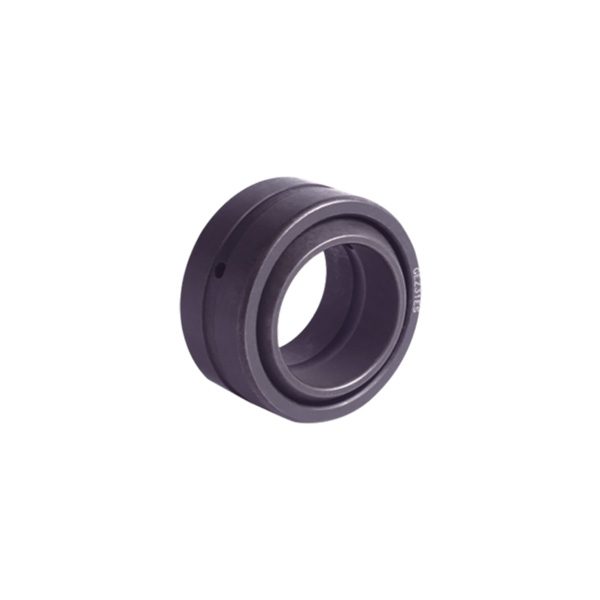

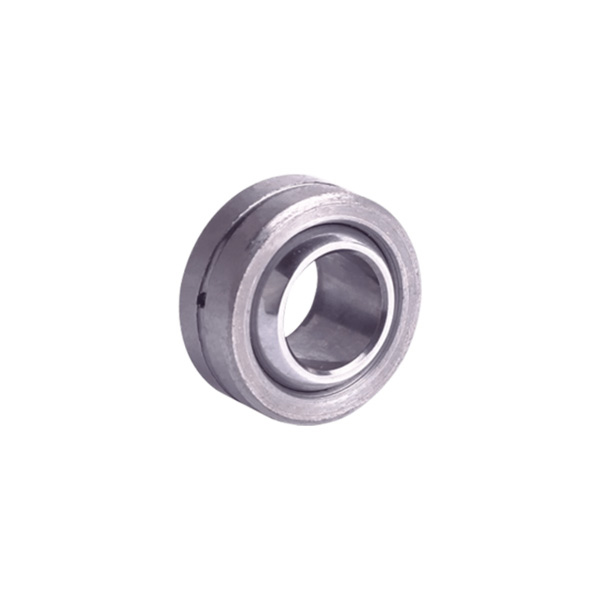
Do not infer a fit from the product photo. Confirm the exact construction on the current Dongzhou range page and product drawing. Load and life must also be checked separately; see our guide to spherical plain bearing load ratings and service life.
7. What to send for a factory drawing review
We review the interfaces, not just the bearing dimensions. Send the assembly drawing with the main load direction, plus the bearing detail and expected installation method. Include shaft and housing materials, heat treatment, wall thickness, seat tolerances, surface finish, operating temperature, lubrication route and required articulation.
If the part is non-standard, Dongzhou can evaluate a supplied drawing or sample. The useful deliverable is a controlled interface: bearing geometry, mating seats and inspection characteristics that can all be checked in production.
Let us review the joint before the seats are machined
Send the bearing callout and full assembly section. We will compare the envelope with current Dongzhou series and identify missing fit, shoulder, retention or lubrication details that need agreement.
Submit a drawing for reviewNingbo Dongzhou Transmission Co., Ltd. | sale02@hkdongzhou.com | +86-574-87815807
Frequently asked questions
Should a spherical plain bearing have a press fit?
Often one or both rings need an interference or transition fit to prevent creep, but the correct fit depends on which ring sees a rotating load, the sliding pair, load, housing and shaft material, wall thickness, temperature and required internal clearance. Use the current fit table for the exact bearing series.
Can too much interference damage a spherical plain bearing?
Yes. Excessive interference or an out-of-round housing can reduce internal clearance, raise articulation torque, distort the outer ring or damage a liner. Thin or light-alloy housings may amplify these effects, so the seat and assembled bearing must be checked together.
Where should mounting force be applied?
Apply force directly and evenly to the ring being fitted. Do not transmit mounting force through the spherical sliding contact. Use a suitable sleeve or press tool that contacts the ring face and never strike the bearing with a hammer or punch.
How should a split outer ring be oriented?
For a split or fractured outer ring, SKF instructs installers to position the split joint at 90 degrees to the main load direction. Confirm the exact supplier's instruction and mark the load direction on the assembly drawing and work instruction.
Does a sealed spherical plain bearing still need a grease path?
A seal does not define the sliding pair. Dongzhou's GE ES-2RS page describes a sealed steel-to-steel design with lubrication features, so the housing or shaft still needs a functioning grease route for that family. Follow the exact suffix and supplier instructions.
What should be checked after installation?
Check that articulation is smooth through the required angle, running or breakaway torque is acceptable, seals are undamaged, the ring has not crept, shoulders and clips are seated, lubrication reaches the intended groove or holes, and no adjacent part contacts the bearing at the motion limits.