

Evaluate a rod end or clevis supplier against the part you intend to buy and the decision you need to make. A convincing catalogue, a genuine certificate and a good sample can each answer a useful question. None answers every question about the order.
What should buyers check? Establish the complete configuration, manufacturing responsibilities and required evidence before comparing price. Verify whether each report is authentic, applies to the proposed item and supports the current approval decision. Record unresolved requirements and the next stage allowed to proceed. Keep supplier approval, product qualification and delivered-lot acceptance separate.
1. Define the order before qualifying the supplier
Start with the purchasing task. Reordering an unchanged component, qualifying an alternative source and developing a custom linkage require different evidence. An alternative supplier's similar part number does not establish that the design, material or production route matches the approved item.
Give every candidate the same baseline: the current drawing and revision, complete part designation, mating interfaces, required supply condition and applicable purchase requirements. Identify the application information needed for technical review, including load definition, movement, environment and maintenance. If these remain undecided, resolve them before treating a quotation as a compliant offer.
| Decision | Question to resolve | Limit of the approval |
|---|---|---|
| Supplier screening | Can this organisation understand, supply and control the proposed scope? | A shortlist is not approval of the component's performance. |
| Product qualification | Does the identified design and configuration meet its intended requirements? | Qualification does not inspect every later production lot. |
| Production sample approval | Does the representative sample and its documentation meet the agreed requirements? | Approval covers its recorded configuration, route and conditions. |
| Lot acceptance | Does this delivery meet the agreed acceptance plan? | Accepting a lot does not approve an undeclared design or process change. |
Write the decision beside the evidence request. Asking for a previous report may be reasonable during screening; asking for records tied to the supplied lot belongs to a different stage. This distinction makes the request more precise without reducing the acceptance requirements.
2. Check technical fit: lined rod ends and clevis assemblies
Lined rod ends: confirm the liner and maintenance requirements
For a lined rod end, ask which surfaces form the sliding pair, what liner the supplier proposes and what maintenance instructions apply. A material option in a catalogue is not an agreed configuration. Confirm the actual body, ball and liner combination on the quotation or controlled specification.
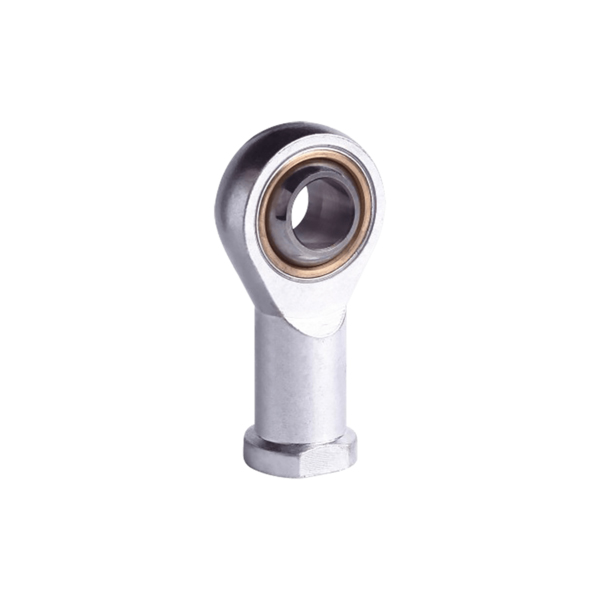
For comparison, Dongzhou's POS range includes a lubrication hole or grease nipple. It is not a direct substitute for SI-TK merely because a bore size matches. For mechanical rod ends, review the complete connection and duty using the rod-end selection guide, then ask the candidate to explain any proposed deviation.
Tang and clevis joints: identify the mating parts and supply boundary
A clevis is the fork; a tang fits between its arms, and a pin connects them. This component distinction is also illustrated in NASA's clevis-and-tang explanation. For procurement, specify who supplies each part and the retention arrangement. A quotation for the fork alone cannot be compared directly with a complete joint.

A spherical rod-end eye and a clevis may be parts of the same linkage. Do not treat their names as mutually exclusive installation choices. Review the actual interfaces. A male-thread clevis also changes the rod-side connection, while a rotating-shaft clevis needs its specified function reviewed rather than inferred from an ordinary fork.
Look for a complete technical response, not just a matching part number
When using a clevis rod ends catalog, keep the full variant, drawing revision, thread and included hardware together. Use the clevis dimension and drawing guide for the detailed interface comparison. A useful supplier response identifies what matches, what differs and what still needs clarification.
Why two M10 entries remain separate candidates
I use the SI-TK catalogue to show why supplier evaluation needs the complete variant. SI 10 T/K and SI 10 T/KFG both list d = 10 mm, B = 14 mm and h1 = 43 mm. Their threads differ: M10 × 1.5 for SI 10 T/K and M10 × 1.25 for SI 10 T/KFG.
That is a 0.25 mm difference in specified thread pitch despite those shared catalogue dimensions. I treat them as two candidates, not one interchangeable item described by a nominal M10 thread.
For a supplier comparison, I would put the complete thread designation beside the part number in the quotation and drawing review. I would ask which material and liner configuration the supplier proposes, and whether the submitted inspection evidence covers that configuration.
The result of this catalogue check is a purchasing distinction, not a performance approval. Matching dimensions establish only the fields actually compared. Before accepting a supplied part, I would still need the agreed thread verification and the evidence required for its material, condition and application. The variant must remain identifiable through receiving.
3. Establish who is responsible for manufacturing and verification
Record the organisation selling the parts, the manufacturing site and the parties performing any relevant outside processing or testing. Ask who controls the drawing, communicates requirements to those parties and releases the finished components.
A material mill, heat-treatment processor, laboratory and exporter can legitimately have different names. The review question is whether their records connect to the proposed parts and whether responsibility is clear. Request that connection before deciding that a name difference is either harmless or evidence of a problem.
I would not use the proportion of in-house work as a quality verdict. For an outsourced operation, ask how the supplier specifies the work, identifies the returned parts, checks the required records and handles a rejected result. Apply the same questions to an internal department. A facility photograph does not establish the control of a particular order.
How I review supplier evidence
When I review a rod end or clevis supplier, I start with the unanswered questions in the order. A catalogue match and a certificate can look convincing while referring to different configurations. I want the quotation, drawing and proposed evidence to describe the same supplied item.
For a lined rod end, I would ask the supplier to identify the actual liner and maintenance requirements. For a clevis assembly, I would establish whether the quotation includes the mating component, pin and retainer. These details belong in the agreed supply scope before anyone discusses sample approval.
The difficulty is often a missing connection between documents. A material certificate may identify a steel heat without showing which finished components came from it. A dimensional report may show acceptable results without identifying the drawing revision or the condition in which the parts were measured. I would resolve those links rather than request another certificate with the same gap.
I also separate the company selling the parts from the organisations performing operations. An outside processor or laboratory is not automatically a problem. I need to know who receives the requirements, who connects the records to the parts and who resolves an exception.
My review sheet gives each requirement a source, supporting evidence, coverage and an open action. If a report is genuine but describes a different configuration, I would not use it to close that requirement. If the measurement method cannot support the specified acceptance decision, a calibration sticker does not settle the question.
I would finish by recording what can proceed: further technical discussion, sample evaluation or the next agreed production stage. Any approval needs a defined scope and a way to identify changes. That keeps a promising supplier assessment from becoming an unintended approval of a different part or an unverified production batch.
4. Request evidence that matches the requirement and purchasing stage
Build the document request from the drawing and purchase requirements. Asking for every available certificate produces a large file, but may leave the important connections unresolved. Each record should identify what it covers and which requirement it helps close.
| Requirement | Evidence to agree | Coverage to check | What remains separate |
|---|---|---|---|
| Part identity | Accepted drawing, variant and quotation | Revision, thread, liner, included hardware and exceptions | Actual conformity of delivered parts |
| Material | Required material documentation and identification records | Specified component, grade, heat or lot and link to finished parts | Effects of later processing and assembled performance |
| Heat or surface treatment | Required process record and verification results | Applicable specification, treated lot, condition and acceptance criteria | Unmeasured properties or unrelated service life |
| Dimensions and threads | Inspection results under the agreed plan | Feature, limits, drawing revision, finished condition and method | Design load or fatigue qualification |
| Assembly function | Agreed fit, movement and retention checks | Identified mating parts and installation conditions | Every possible load, environment or installation |
| Required performance | Applicable qualification or test report | Configuration, specimens, method, conditions and criteria | Acceptance of an uninspected delivery lot |
| Management system | Certificate and independent status verification, when required | Legal entity, site, scope, issuer and status | Product-specific dimensional or performance approval |
Compare what the operations verify
A material result, a heat-treatment record and a finished-part inspection answer different questions. If hardness is specified, agree the method, location and acceptance range appropriate to that requirement. If a coating is specified, identify the required coating properties and verification. Do not replace either with an unrelated corrosion-test duration or a general material description.
The same applies to dimensions: identify whether inspection concerns an unfinished component or the final supplied condition. A pre-finish measurement does not automatically close a finished-size requirement. Where the acceptance decision depends on measurement uncertainty, include that consideration in the method review.
NIST's metrological traceability guidance relates a measurement result to a reference through a documented calibration chain, with uncertainty contributions. It also states that traceability alone does not establish fitness for purpose. Material-lot tracking and metrological traceability are different checks; a calibration label cannot substitute for either the part-to-record link or a suitable measurement method.
Do not ask every document to prove the same thing
A declaration of conformity, material certificate, dimensional report and qualification test are not interchangeable. Agree which are needed, at which stage and with which delivery. Third-party testing, full dimensional inspection and per-lot property checks are not automatic requirements for every industrial order. Apply the actual contractual, regulatory and technical requirements, including customer-specific obligations where relevant.
5. Verify reports through three separate checks
A report can be genuine and still be unsuitable for your decision. Review authenticity, applicability and sufficiency separately. Passing the first check does not bypass the other two.
Is the document authentic?
Check the issuer, report number, complete pages and any amendment relationship. For independent verification, find the issuer's contact details through its official website or an appropriate official directory. Do not rely solely on a phone number printed in the supplied PDF. Ask the issuer to confirm the record through its available verification procedure.
Does it apply to this part and order?
Connect the report to the complete variant, revision, material and liner configuration, manufacturing condition and identified specimens or lot. Establish whether the subject was raw material, a test coupon, a finished component or the assembled joint. A result on one does not automatically describe all the others.
There is no useful blanket rule that every report becomes unacceptable after one year. Assess age together with the intended use, changed requirements, configuration or process changes, and the purchase agreement. A historical qualification report and a current shipment record have different jobs.
Is it sufficient for the decision you are making?
Compare the method, test conditions and result with the actual acceptance criteria. A report may identify a method yet omit the criterion needed to decide conformity. A dimensional result may be valid for its measurement task but say nothing about fatigue performance. List the remaining evidence rather than stretching the report's conclusion.
Read certification and accreditation scopes correctly
ISO 9001 addresses quality management systems. Its public page identifies the 2026 edition. That does not itself establish the status of a particular certificate to an earlier edition; verify the certificate and applicable transition arrangements with its issuer. Do not treat a management-system certificate as the inspection report for your selected rod end.
ISO's certification guidance explains that external certification bodies issue certificates, not ISO. It identifies verification through the relevant certification or accreditation body and current international channels, including Global ACI, which has assumed the former IAF and ILAC roles. Check the named organisation, covered site, scope and status rather than accepting an ISO logo as verification.
For a laboratory, check whether the required activity falls within its accreditation scope. ILAC's published guidance on certificates and reports distinguishes the accreditation scope from the results and methods in an issued report. Follow the relevant accreditation body's current directory and verification process; a laboratory's accreditation does not mean every possible test is covered.
6. Make sample approval relevant to the proposed production route
Before ordering samples, decide what they need to demonstrate. A development prototype can help check geometry or assembly access. A production-representative sample needs an agreed relationship to the intended material, operations, treatment, assembly and inspection route.
Ask the supplier to identify any sample-only substitutions or operations. If the sample has a different finish, material source or assembly method, record which conclusions remain usable and what must be verified on the proposed production configuration. A good-looking sample is not evidence that the difference is irrelevant.
Use a documented sample review to connect the drawing requirements with inspection results, discrepancies and approval scope. Our first article inspection guide for custom linkage parts covers that process in more detail. Supplier screening does not by itself impose a particular industry report format on every order.
Agree how changes and reorders will be handled
Define which changes need notification and review, who evaluates their effect and what approval is needed before supply. Relevant examples may include a material or liner substitution, a process-source change, a revised thread or a changed inspection method. Review the affected requirements rather than assuming either that nothing needs checking or that every change requires a complete repeat of all tests.
7. Compare quotations on the same technical and delivery scope
Normalise the proposed configuration before comparing cost. One offer may include a pin and retainer, while another covers only the clevis. One may include the requested inspection records; another may exclude them or propose a different verification stage.
Put the offers side by side against the same fields:
- Complete variant, thread designation, hand, drawing revision and accepted deviations.
- Actual material, liner, finish and supplied component or assembly scope.
- Samples, required records, tests and inspection responsibilities.
- Lot identification, packaging and document linkage at receiving.
- Quantity basis, delivery milestones and the actions required before production release.
Ask each supplier to resolve exclusions explicitly. A lower price does not prove poor quality, and a higher price does not close a missing requirement. Where the offers differ, compare the cost and responsibility of bringing them to the same agreed scope.
For non-standard parts, send an organised drawing or sample enquiry rather than a photograph alone. The custom rod-end and clevis RFQ guide helps define that package. Dongzhou also offers custom linkage discussions based on drawings or samples; the actual supply and evidence requirements still need agreement for the order.
8. Use a qualification checklist with clear hold points
Give each requirement an evidence reference, coverage statement, open action and responsible person. Record whether the dependent activity can continue, needs clarification or must be held. These are review statuses, not a universal supplier scoring standard.
| Finding | What it currently supports | Open action / owner | Stage decision |
|---|---|---|---|
| Catalogue and quotation specify different thread pitches | Candidate identification only | Supplier and buyer engineering resolve the required variant | Hold part approval |
| Material record lacks a link to finished parts | The recorded material result | Supplier quality provides the required identification chain | Hold the material requirement open |
| Prototype used a different finishing route | Only the checks unaffected by that difference | Engineering identifies affected checks and representative sample needs | Clarify before production approval |
| Agreed stage evidence is complete and accepted | The recorded approval scope | Buyer records the decision and remaining delivery obligations | Continue to the named next stage |
A critical unresolved requirement should remain visible even when the supplier performs well on price or delivery. A weighted score can help compare otherwise acceptable candidates, but it should not average away a missing material identity or an unresolved interface.
How to run the supplier evidence review
Use this sequence to record a scoped purchasing decision for an identified rod end, clevis or linkage assembly.
-
Set the configuration baseline
Record the part, revision, actual configuration, supply condition and applicable requirements. Name the purchasing stage under review.
-
Assign manufacturing and verification responsibilities
Identify the seller, manufacturing site and relevant processors or laboratories. Agree who connects records to parts and resolves exceptions.
-
Match evidence to each requirement
Review authenticity, applicability and sufficiency. Record the covered item, sample or lot, conditions and remaining limitations.
-
Close differences before the dependent stage proceeds
Assign unresolved items to an owner. Obtain the missing evidence, an accepted technical resolution or the required approval before releasing the affected activity.
-
Record the decision and change boundaries
State what is approved, what may happen next and which delivery obligations remain. Keep the agreed baseline and change-review requirements with the order.
9. Questions buyers ask about supplier qualification
Is an ISO 9001 certificate enough to approve a rod end supplier?
No. Verify the certificate's organisation, site, scope and status, then review the product and order requirements separately. A management-system certificate does not replace the selected component's material evidence, dimensional results or required performance verification.
Is a different company name on a report a reason to reject it?
Not by itself. The report may name a material producer, processor, laboratory or another party in the supply chain. Establish that party's role and the documented link to the proposed parts. Keep the requirement open if the connection cannot be demonstrated.
Does every order need third-party testing?
Not automatically. Determine the necessary evidence from the application, purchase agreement and applicable requirements. Where independent testing or accredited work is required, agree the method, scope, specimens and acceptance criteria before placing the work.
Should buyers reject every report older than one year?
No. Review its purpose, configuration coverage, method, relevant changes and contractual requirements. A design qualification report and a record for the delivered material lot serve different purposes. Age alone does not establish whether either is applicable.
Does an approved sample qualify all future production lots?
No. Sample approval has a defined configuration and scope. Future deliveries still need the agreed identification and acceptance controls. Review proposed changes against the approved baseline and determine which evidence needs updating.
What should happen if the material or process source changes?
Follow the agreed notification and approval requirements. Identify the affected properties, interfaces and records, then decide what renewed verification is needed. Do not assume that a source change is irrelevant or that it automatically requires repeating every qualification test.
Finish the evaluation with a written decision, not just a folder of reports. Name the configuration, the evidence accepted and the next stage permitted. That gives purchasing, engineering and receiving the same basis for the order.