

Industry News

What Is a Spherical Plain Bearing? Design, Types and Selection
A spherical plain bearing is a sliding bearing with a convex spherical surface on the inner ring and a matching concave surface in the outer ring. This geometry carries load while allowing oscillation, tilting and angular misalignment between the shaft and housing. There are no balls or rollers betw......
Read More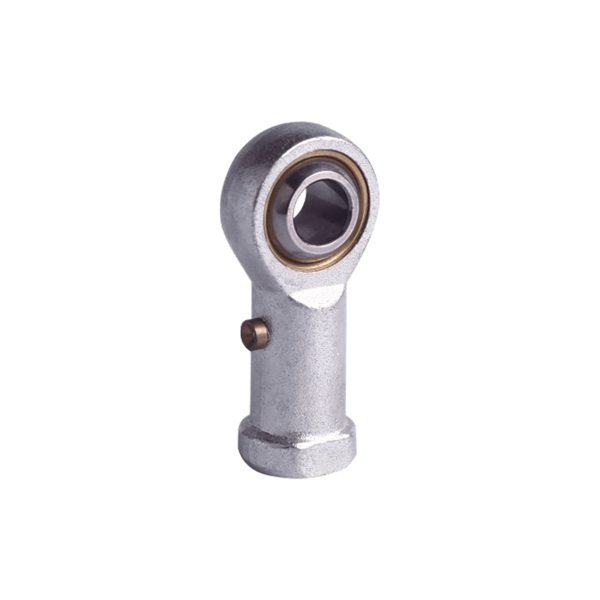
Rod End Bearing Applications: Where They Are Used and Why
Rod end bearings are used at the ends of rods, cylinders and linkages that must transmit push or pull load while accommodating angular movement. Common positions include hydraulic and pneumatic cylinders, steering or control rods, agricultural and construction linkages, and industrial mechanisms. A ......
Read More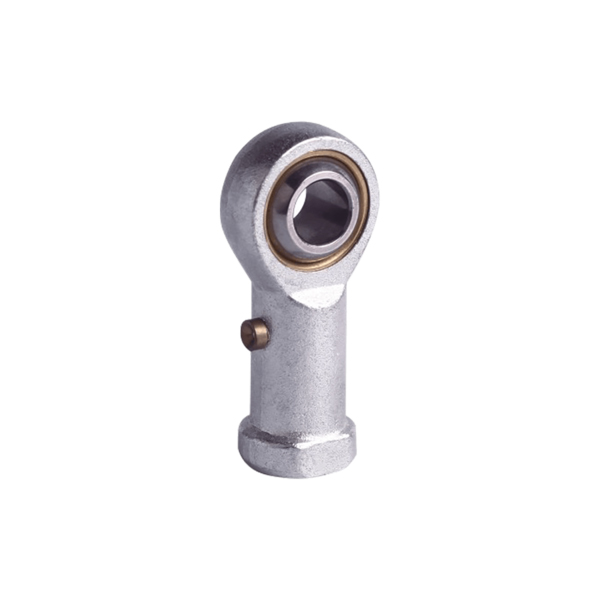
Common Rod End Bearing Failures: Causes, Warning Signs and Prevention
The most common rod end bearing failures are excessive play, worn or damaged liner material, stiff movement, corrosion, loose threads or hardware, a cracked eye and a bent or fractured shank. From our factory's point of view, the failed part is only half the evidence. We trace the symptom back throu......
Read More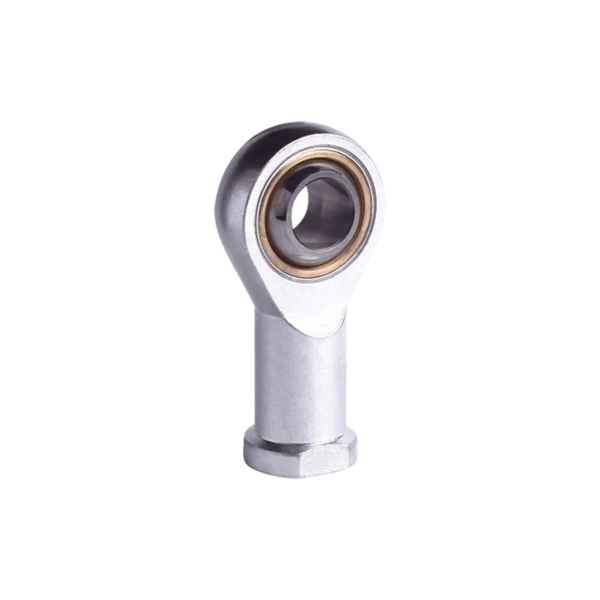
Rod End Bearing Load Ratings: Static, Dynamic and Load Direction
A rod end table commonly lists dynamic C and static C0. Use C when evaluating a joint that moves or oscillates under load and C0 when checking a stationary load, but only under the manufacturer's stated definitions. Neither value is a complete-linkage rating. Check radial versus axial direction, loa......
Read More
Left-Hand vs Right-Hand Thread Rod Ends: When to Use Each
Use a right-hand thread for a conventional single-end connection. Use a left-hand thread when the mating component requires it or when the linkage is designed with opposed threads. Pairing one right-hand and one left-hand rod end allows a center tube or adjuster to change linkage length while both e......
Read More
What Is a Rod End Bearing? Types, Parts & How They Work
A rod end bearing is a threaded, self-aligning joint with a spherical plain bearing set in its head, letting a linkage pivot and absorb misalignment while it carries load. What actually separates one rod end from another is three choices — the thread (male or female), the construction (2-, 3- or 4-p......
Read More